
• About Us
    • About Us

    • People
      • Staff

      • Research Associates

      • Student Interns

    • Strategic Plan

    • Programmes
      • Environment & Natural Resources

      • Democracy, Peace & Security

      • Economic Governance

      • Science, Technology & Innovation

    • Projects

    • Internship Programme

    • Media Contact
  • Our Work
    • What We Do

    • Policy Research & Analysis

    • Policy Outreach & Advocacy

    • Capacity Building & Citizen Engagement

    • Monitoring Policy Implementation
  • Publications
    • Search Topics

    • All Publications

    • Book Volumes

    • Research Papers

    • Briefing Papers

    • Fact Sheets

    • Reports

    • Working Papers

    • Dialogue Reports

    • Infographics
  • News & Information
    • News & Information

    • Videos

    • Press Releases

    • Success Stories

    • Annual Reports

    • IFFs Insights

    • Memos & Petitions

    • Events

    • Newsletters
      • Local Governance Briefer

      • Economic Governance Briefer

      • Green Economy Briefer
  • Our Impact
    • Impact Booklets

    • Videos

    • Success Stories
  • Contact
  1. Home
  2. News & Information
  3. News
Public Dialogue

Public Dialogue on the Conflict in the Middle East and it's Implications on East Africa's Economy, Security and Geopolitics


Posted on: 2026-03-17 11:34:06
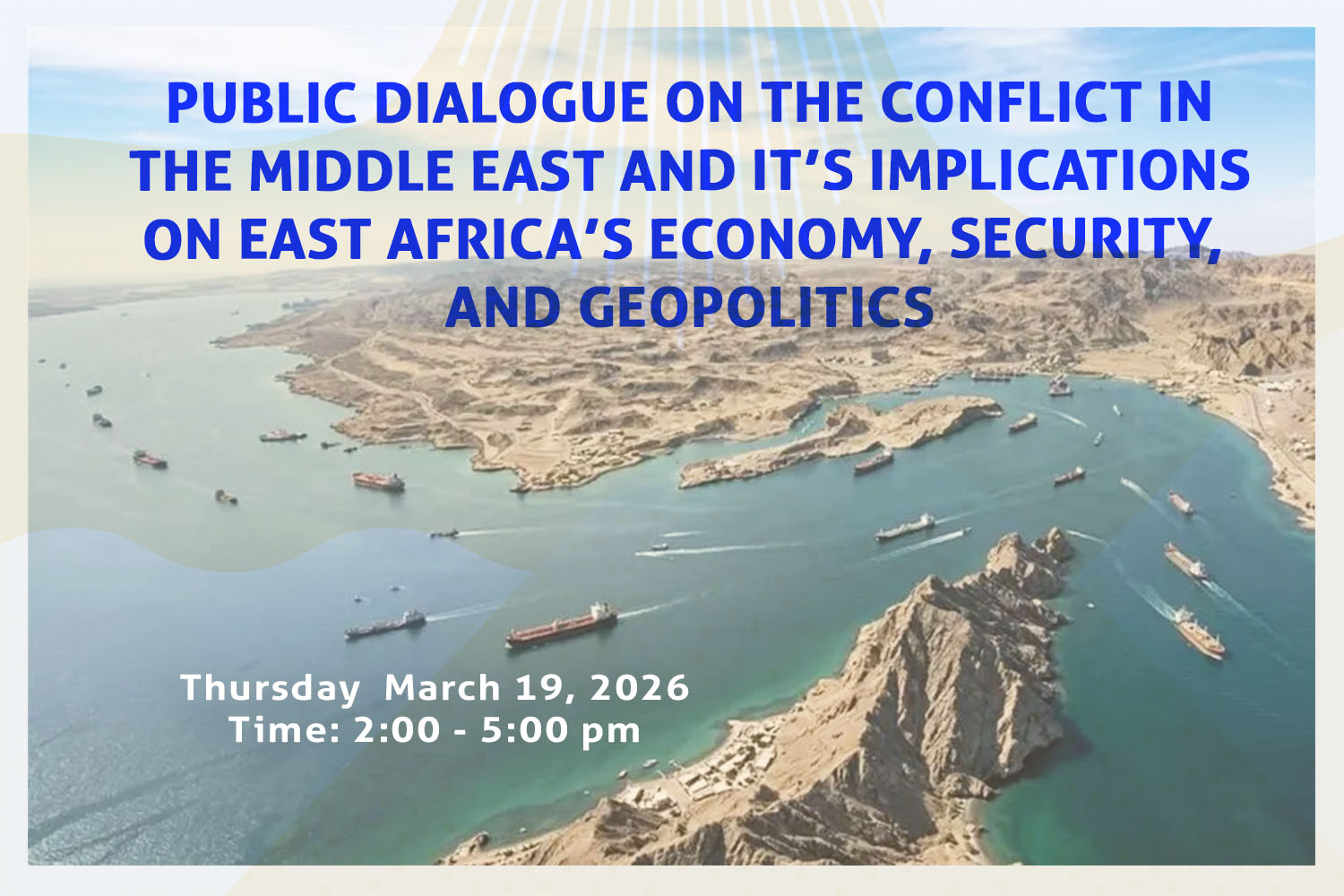
ACODE in partnership with other partners has organised a hybrid public dialogue to discuss the current conflict in the Middle East and its implications on the East African economy, security and the geopolitical landscape.

The rising tensions in the Middle East have once again drawn global attention to the region’s central role in shaping economic and security dynamics far beyond its borders. The current escalation involving Israel/United States, Iran and the Gulf States is already affecting global energy markets and trade routes, with consequences that extend into Africa.

East African countries, in particular, are closely tied to the Middle East through trade, labour migration, and investment flows. These connections, while economically beneficial, also increase the region’s exposure to external shocks. As the conflict intensifies, these interdependencies make East Africa vulnerable to disruptions that originate far beyond the continent.

Economic Pressures and Vulnerabilities

One of the most immediate effects of the conflict is the upward pressure on global fuel prices. Since many East African economies depend heavily on imported petroleum products, rising energy costs quickly translate into higher transportation expenses, inflation, and increased costs of essential goods. This places additional strain on households and public finances alike.

The impact is further amplified in agriculture, a sector that underpins livelihoods across the region. Access to key inputs such as fertilizers often sourced through global supply chains linked to the Middle East can become more uncertain or expensive during periods of geopolitical instability. As a result, food production and food security face heightened risks.

Trade, Remittances, and Investment Flows

The Middle East remains an important economic partner for many African countries. It is a destination for exports, a source of foreign investment, and a key host region for migrant workers. Any prolonged disruption in the region can therefore affect trade volumes, delay investment decisions, and reduce remittance inflows that support millions of households in East Africa.

At the same time, shifting global conditions may create uneven outcomes. While some resource-exporting countries could benefit from higher commodity prices, many others will struggle with rising import bills and reduced fiscal space.

Peace and Security Concerns

Beyond economic impacts, the conflict also carries security implications. The Middle East’s proximity to important maritime corridors, including the Red Sea, means that conflict can interfere with shipping routes that are vital for trade and humanitarian supplies into and out of East Africa.

There is also concern that broader geopolitical tensions could indirectly influence fragile contexts within the region. The Horn of Africa, already dealing with internal conflicts and governance challenges, may face additional pressures if global rivalries deepen or if non-state actors exploit the situation.

Shifting Geopolitical Landscape

The crisis highlights Africa’s increasingly complex position in global geopolitics. Governments across the continent have generally taken cautious diplomatic stances, balancing relationships with multiple external partners while trying to safeguard national interests. However, Africa’s exposure to global shocks due to its its reliance on external systems for energy, finance, and trade underscores a deeper structural issue.

PDF Version

More News


Past Event

High-Level Policy Dialogue on the Budget

Past Event

Journalists' Training on Illicit Financial Flows in Uganda

Past Event

Capacity Building Training for District Councils, Committees, Statutory Boards and Commissions

Citizens' Convention

6th Annual Citizens’ Convention on Extractives 2023: Shaping Mineral Wealth and the Energy Agenda

Past Event

ACODE Spearheads Initiative to Empower Women, Redefine Gender Equality in Uganda

Past Event

High-level Policy Dialogue on the Conflict in the Democratic Republic of Congo

Past Event

National Dialogue on the Integration of the Productive Use of Solar Energy (PUSE) in the Planning and Budgeting for Agriculture in Uganda

Past Event

Training Workshop for MDAs on Climate Finance Tracking, Accountability and Budget Compliance

Webinar

Webinar Discussing Uganda’s Progress on Financing and Coordination of the Productive Use of Solar Energy (PUSE) in the Agricultural Value Chain

Press Release

CSO Position on Public Finance Management (Amendment) Bill 2021

Press Release: Global Corporate Tax Deal – An African Perspective

GFI & ACODE Evaluate the Key Elements, Opportunities, and Challenges of the OECD/G20 Tax Deal

Press Release

Civil Society Concerns on the Oil Tax Obligations Stalemate between the Government of Uganda and International Oil Companies over the Lake Albert Project and the EACOP

Press Release

Civil Society Statement on the Announcement of the Final Investment Decision for Uganda’s Oil and Gas Sector

Press Release

Uganda Admitted to the Extractive Industries Transparency Initiative

Press Release

Addressing TBML Remains Difficult; Corrosive to Developing Economies, New Publication Find

Press Statement

CSO press statement on the World Bank decision to halt new public financing to Uganda

Press Release

A Call For More Government Commitment As Uganda Launches Its Second EITI Report 2020/2021

Press Release

Illicit Financial Flows Risk Factors in Uganda’s Oil and Gas Sector - A Call to Action

Press Release

Outstanding Legal, Environmental and Social Issues in the Impact Assessments for the East African Crude Oil Pipeline

Press Release

Transparency, Accountability and Sustainable Development of the Petroleum Sector - A Call to Action

Speech by Mr Emmanuel Tumusiime-Mutebile, Governor of the Bank of Uganda, at ACODE Dialogue on 25 February 2015

The impact of oil price volatility and its implications for the economy and for macroeconomic stability

CSO Statement

CSO Statement at the National Budget Conference on the FY2024/25

Press Release

Press Statement on the Key Outcomes of COP 28

Press Release

Unlocking Uganda's Potential: Factsheet Highlights Key Strategies for Domestic Revenue Mobilization

Press Release

MEDIA AND CIVIL SOCIETY BRIEFER ON THE KEY RESOLUTIONS OF THE 12th CONFERENCE ON CLIMATE CHANGE AND DEVELOPMENT IN AFRICA (CCDA-XII)

New Factsheet Analyzes Uganda’s Exit from FATF Grey List and the Road Ahead

Press Release

New Report Unveils Gaps in Uganda’s Mining Legal Regime and Proposes Actionable Solutions to Combat Illicit Financial Flows along the Mineral Supply Chain

Statement

Enhancing Resilience, Livelihoods and Climate Justice in Karamoja And West Nile: Post - Uganda Water and Environment Week (UWEWK) 2025 Statement

Press Release

GFI and ACODE Release a Factsheet on the Status of Beneficial Ownership Laws in Uganda

Public Dialogue

Public Dialogue on the Conflict in the Middle East and it's Implications on East Africa's Economy, Security and Geopolitics

Press Release

Joint Press Statement by CSOs in West Nile on Budget Priorities for FY 2026/2027

Press Release

Joint Press Statement - Civil Society Call for the National Budget to Address Service Delivery Needs in Karamoja Sub-Region

Physical Address

Advocates Coalition for Development and Environment

Plot 96, Kanjokya Street
Kampala, UGANDA

Phone: +256 312 812150
Email: acode@acode-u.org

Partner Links

  • CSCO
  • Ministry of Local Government
  • Ministry of Finance
  • ULGA Secretariat
  • Africa Portal Library
  • The Land Portal

Resources

  • Our Strategy
  • Success Stories
  • Annual Reports
  • Press Releases
  • Videos
  • Events
  • Jobs & Bids
  • Gallery

Quarterly Newsletter

Subscribe to our quarterly newsletter and access latest information on contemporary public policy issues.

© 2026 Advocates Coalition for Development & Environment. All Rights Reserved
Designed & Managed by Robert Nsubuga